Game guide · FONPER
A practical guide to Memory Pairs
Take a moment with Memory Pairs before moving to another game. Match all eight pairs. Your result is the number of two-card turns used. Check the relevant rule before repeating a move. Compare the starting position with the example in the Guide. Use the example below to understand a decision.
A small practice goal
After a move, check what changed. Decide which rule explains the new state before acting again. Make the next step deliberately.
What counts as success
Match all eight pairs. Your result is the number of two-card turns used. Keep that objective in view throughout the round. Try to explain the aim in your own words.
Start here and follow along
- Turn over any face-down card.
- Choose a second card. Equal symbols stay visible.
- Unequal cards turn back after a short pause.
- Continue until every pair is visible.
Getting comfortable with the controls
Use the on-screen controls with a mouse or touch. A careful first action helps you become familiar with the layout. Make sure you are interacting with the game rather than the surrounding page.
Work through an example
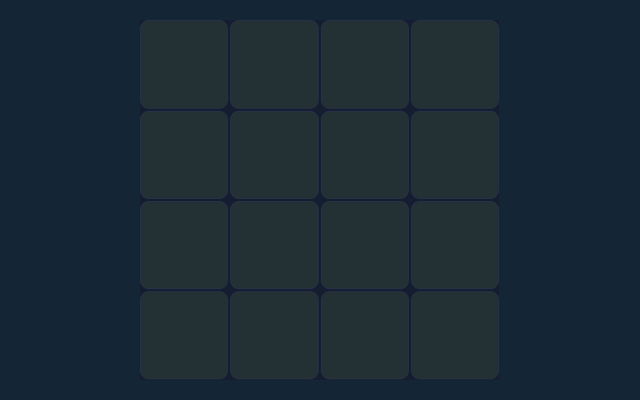
Seeing a star at the top left and another star in the bottom row gives you a matching pair on a later turn. Use the example as a guide rather than a substitute for reading your board. Notice the change in the playing area.
Pay attention to this rule
You cannot turn a third card while a mismatched pair is still being shown. Read the feedback to see why an action did not have the expected result. Before your first action, say what you are trying to achieve. Then compare the result with the goal.
Further help with the game
For my first round, what is the goal of Memory Pairs?
The key detail is this: Match all eight pairs. Your result is the number of two-card turns used.
While learning, how do I control Memory Pairs?
The key detail is this: Use the on-screen controls with a mouse or touch.
For this browser game, what example helps explain Memory Pairs?
Turn over one card, remember its position, then choose a second. A matching pair stays found; a mismatch is hidden again.
For a quick reminder, what should I watch out for in Memory Pairs?
Here is the relevant explanation: You cannot turn a third card while a mismatched pair is still being shown.
For this browser game, what format does Memory Pairs offer?
Play using the solo mode shown on this page. Read the controls before starting a new round.
As a new player, which play mode does Memory Pairs use?
Keep this in mind: The mode on this page is Solo. Same-device play uses one screen; this game library does not provide internet matchmaking.
For my first round, where should I start with Memory Pairs?
The key detail is this: Turn over any face-down card.
When I return, do I need an account or a payment for Memory Pairs?
Here is the relevant explanation: No player account or payment is needed. Game scores are recreational results, not cash prizes.
For a quick reminder, how can I find Memory Pairs again?
For clarity: Use the Games list or save this game page in your browser bookmarks. The Guide is linked from the playing page.
For my first round, how do I report an issue with Memory Pairs?
Keep this in mind: Use the contact form and include the game name, browser, device and the actions that led to the issue. Do not send passwords or payment details.